In House Hearing, DAAG Jenny Discusses FCA Enforcement Priorities Related to Grants, Faces Questioning on Using FCA to Target Discrimination
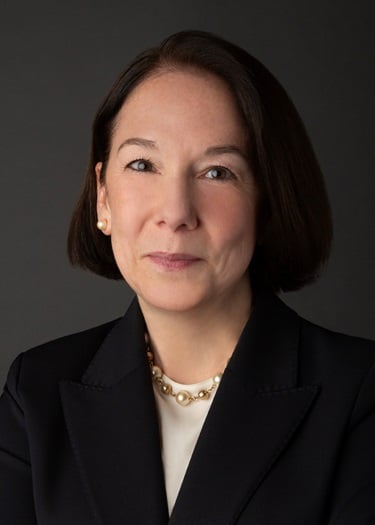
On June 24, 2026, the Investigations and Oversight Subcommittee of the U.S. House of Representatives Committee on Science, Space, and Technology held a hearing on “Federal Research Funds: The False Claims Act’s Role in Combating Grant Fraud.” Brenna Jenny, DOJ’s Deputy Assistant Attorney General for Commercial Litigation, testified on three FCA enforcement “focus areas” related to federal grants, before responding to questions regarding the use of the statute to target discrimination.
First, “failure to disclose foreign funding.” Research institutions receiving federal funding, Jenny testified, must disclose contracts or gifts, from any foreign source, that exceed $250,000 in a year. Recipients of NASA funds, in particular, must also certify that they will not work with China or Chinese-owned companies, she said. According to Jenny, DOJ has entered into five settlements with grant recipients to resolve allegations that those grantees failed to disclose foreign funding.
Second, “falsifying research data or images.” Grantees have an obligation accurately to describe data and prior related research when applying for grant funding, Jenny testified. Falsifying research, she said, can cause agencies to award grants for projects that are less deserving. DOJ’s Civil Division, she testified, has multiple active investigations into allegations of falsified or manipulated images in grant applications.
Third, “violations of government cybersecurity requirements.” Jenny testified that when a government grant involves using sensitive government data or personal health information, the grant commonly imposes specific cybersecurity requirements. According to Jenny, grantees that submit a claim to the government despite violating cybersecurity obligations could be liable under the FCA. When a grantee violates cybersecurity requirements, Jenny advised, it potentially jeopardizes the security of government information and data, such that the government does not receive the level of security that it bargained for. In the past five years, she said, DOJ has had sixteen cyber-fraud settlements.
Given an opportunity for questions, Congresswoman Sykes shifted the hearing’s focus to DOJ’s recent efforts to use the FCA to combat what the Trump Administration views as illegal discrimination via diversity, equity, and inclusion (DEI) conduct. We have previously written on this subject here, here, and here. Congresswoman Sykes asked Jenny how researchers can operate DEI programs without engaging in illegal discrimination or DEI. Jenny clarified that DOJ’s focus has been on unlawful discrimination that violates longstanding federal anti-discrimination protections, particularly Federal Acquisition Regulation (FAR) 52.222-26. Jenny testified that that provision broadly prohibits government contractors taking protected characteristics—particularly race or sex—into account when hiring or promoting. If federal contractors expressly certifying compliance with that provision do not comply with it, that “can serve as the predicate for FCA liability.” Jenny testified that DOJ’s cases targeting such false certifications “extend back to the full extent of the statute of limitations period, which can be up to 10 years.” Jenny also advised that she believes that not all DEI programs discriminate. The “critical question” is whether the program makes decisions based on protected characteristics.
Congresswoman Bonamici asked Jenny whether a university that receives a federal grant faces FCA liability from running a program to recruit women in science, technology, engineering, and math (STEM) fields. Jenny responded that it is “hard to speculate on a hypothetical without seeing the certification.” The key, she said, is whether the contractor or grant recipient made a false certification. Pressed on whether she views as unlawful legislation that encourages women to enter STEM fields, Jenny repeated that companies and grantees can run DEI programs without illegally discriminating. She also reiterated that DOJ’s focus is “the language in the FAR regulation and Title VII.”
A recording of the hearing is available here.
This post is as of the posting date stated above. Sidley Austin LLP assumes no duty to update this post or post about any subsequent developments having a bearing on this post.